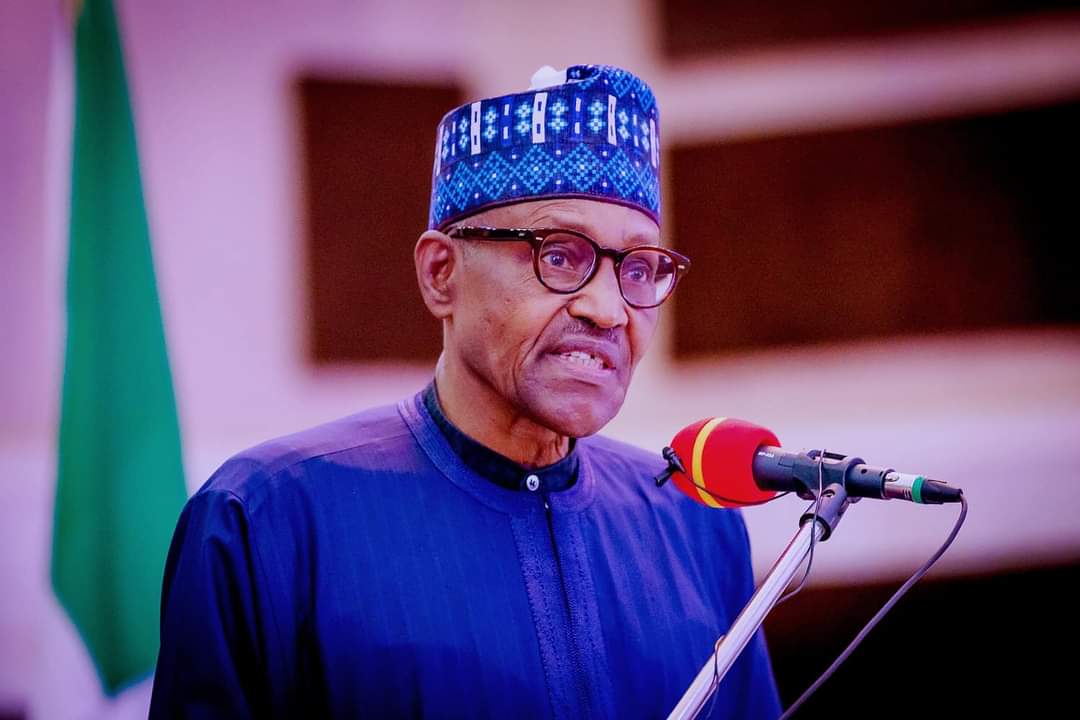
Outrage has continued to trail the announcement by the
Minister of Finance, Budget and National Planning, Zainab Ahmed, that the
federal government has borrowed $800 million (about N368.2 billion in the official
rate or N596 billion in the black market) from the World Bank to use as
palliative ahead of the total removal of petrol subsidy in June.
While saying subsidy as it is being implemented in Nigeria
is not viable, pundits in the areas of economy and finance said it is very
unlikely that the N368.2 billion interventions will cushion the economic
challenges that will come with the total removal of what the government called
“under-recovery.”
They said the subsidy wouldn’t have been an issue for long had past governments tackled the root cause, insisting that palliatives were
akin to momentarily scratching the surface as the pain would soon return.
Marketers and other groups in the downstream sector of the
petroleum industry have said that fuel prices may likely double as soon as the
subsidy is removed and it will have a ripple effect on everything.
The finance minister at a press briefing after the Federal
Executive Council (FEC) meeting presided over by President Muhammadu Buhari, on
Wednesday, said the government had met with members of the incoming
administration as well as the newly established Presidential Transition Council
(PTC) on the palliative issue.
Specifically, she said the $800m, which is the first
tranche, will be disbursed to the 10 million households (equivalent to
about 50 million Nigerians) considered to be most vulnerable already captured
by the National Social Register (NSR), to cushion the effect of the subsidy
removal.
“This is a commitment in the Petroleum Industry Act…We are
on course, we’re having different stakeholder engagements,” she said.
‘No transparency in managing subsidy’
Speaking at the event, Jameel
Muhammad, blamed the government for the lack of transparency in the petrol
subsidy issue.
He said, “My initial impression has always been the lack of
transparency. 800 million dollars is about N362 billion (official rate), which is about 5 to 6 percent of what the government now claims to be spending
on subsidies, which is about N6 trillion.
“If you remove N6 trillion from the system, you are
cushioning the effect with 6 percent of it,” he said. He argued that there is
already a framework to fund social investments and not for the government
to engage in fresh borrowing. Muhammad also said it was wrong for the
government to borrow to subsidize consumption.
He said, “Why is the government going to the World Bank to
get a loan again? I am sure it is at a certain interest rate, which is draining
resources. There is already a lack of transparency in the operation and then
the administration of the removal too, this is a very big problem.
“Government could subsidize production from the source but
not to subsidize consumption by giving out money to people,” he said. On his
part, the Co-Founder and CEO, of Nairaxi Nigeria, Kingsley Eze, said if 10,000,000
vulnerable households are on the national social register and even if you
divide the $800m among the 200 million people that will be around $4, which is
about N2, 000 and not enough to fund transport cost to work for five
days.
He said, “If Nigeria has gotten $800m, how do you invest it
to be sustainable? My opinion is to invest this money in creating the right
infrastructure for what one gains from the subsidy since the subsidy is used
for subsidizing mobility and logistics; making sure that one digitizes
transportation and not sending the money to citizens but to operators.
“There are bus companies and digital transportation
including foreign players doing that in Nigeria. Government should have a
framework for bus companies and then subsidize it to bring down the price; it
is a better way that has been tried in other countries.
“If you transfer such money assuming to all the citizens,
which will be around N2,500, operators will hike the transport price but if
there are buses with a government logo on it knowing that the price is cut by
50 percent, this is more sustainable,” he said.
Speaking on the view by labour that fuel subsidy should not
be removed until the refineries and other plans are in place, Mr. Eze said the
request was justified. “Nigeria is a rich country selling about one million
barrels every day and the question is, what is the government doing with the
revenue?”
He also shared the view that the government should be
transparent and get everyone involved in the process of getting the data right
for Nigerians to believe in the process. Both Mohammad and Eze called for more
sensitization of Nigerians.
“It is the duty of the government to come out
transparently to tell the people that this is a consumption subsidy and that it
is not free even if the people own the oil. The National Orientation Agency
(NOA) should tell Nigerians that there is a lot of corruption, especially in
padding the cost of subsidy while another cabal will be padding the quantity of
fuel supply as figures are padded from one agency to another,” Muhammad
said.
On his part, the Executive Director, of Centre for Fiscal
Transparency and Integrity Watch, Umar Yakubu, said the $800m loan was not
thought out well and that the amount to be shared at the end of the day for the
50 million poor Nigerians is a paltry sum.
His words: “If you do the maths, they said they want to give
50 million poor Nigerians palliatives. When you now divide the amount by 50
million people, it will give you $16 per person, which will be slightly N7,500
or maybe N10,000 at the parallel market. Then you ask yourself what that amount
will do to people for the next four years, that is assuming the money gets
to the people intended.
“Now when looking at the opportunity cost, with $800m, it
means $1m can go to each local government comfortably since we have 774 local
governments and you will even have a balance of $26 million,” he said.
According to him, “If every local government invests $1m
dollars in schools, we will have about N500m, which can be used to build and
renovate schools and hospitals as well. Imagine equipping schools and hospitals
in each local government with that amount, it will surely lead to development.”
Sharing the same thought, another source said, “The World
Bank to gift Nigeria $800m to cushion the adverse effect of fuel subsidy
withdrawal is ok but the decision of the FGN to disburse the fund through
direct payments into the accounts of the poorest citizens is fraudulent. The
poor do not have bank accounts. How does the government identify and select the
beneficiaries?
“Why not use the funds to improve social services, health care, and education?” he asked. Over N16bn wasted on SURE-P
The plan to spend $800m on palliative measures will not be
the first if eventually implemented after June 2023. The Goodluck Jonathan
government 2012 spent over N16 billion on the Subsidy Reinvestment and
Empowerment Programme (SURE-P) for the Public Mass Transit Revolving Fund
(PMTF) but most of that money was not recovered as a loan from the
beneficiaries.
According to reports, The Infrastructure Bank (TIB) gave out
the fund through mass transit vehicles to 31 beneficiaries, mostly commercial
transport operators with 1,179 vehicles released under a four-year repayment scheme.
It was later found that only a few firms like ABC Transport PLC and Young Shall
Grow Transport Ltd fully repaid their loans, according to an investigation by
The ICIR in 2016.
The bank lists as “Chronic defaulters 15 companies and
organizations, owing N4.586bn as of December 2015. Among these, the National
Union of Road Transport Workers (NURTW) got N2.3bn, the Nigerian Association of
Road Transport Owners (NARTO) got N403.4 million, and the Road Transport
Employers Association of Nigeria (RTEAN) got N370.7m.
Nigeria spends 6trn on subsidy
Despite over N6 trillion in subsidies funding for petrol in
about 18 months so far, Nigerians have continued to buy the product at N195/l
in Abuja and over N300 per litre in the states.
The country spent over N3.3tr on what it calls
under-recovery of petrol import through the Nigerian National Petroleum Company
(NNPC) Ltd. It pegged another N3.35tr for the same purpose, which would serve
till June 2023, a month into a new administration.
At least N200 billion is spent every month on the subsidy to
keep the petrol price within the limit previously but that keeps rising. The pump
prices have changed about three times in one year. From N165/l early in 2022,
the pump price rose to N175/l, N185/l, and now N195/l as the official rate in
Abuja while it is high above N300/l across some states.
In February, the Group Chief Executive Officer of NNPC Ltd,
Mele Kyari, said about N400bn is spent to subsidise petrol every month, which
is about N202 per litre of petrol.
Kyari said the landing cost of importing petrol three days
ago was N315 per litre but that NNPC transfers to the marketers at N113/l and
at 66 million litres daily multiplied by 30 days, it amounts to N400bn
monthly.
“It is a strain on the cash flow of our company when you
don’t get a refund from the Ministry of Finance. But we will continue to
support the country and provide energy security to the country,” said Kyari.
The World Bank has repeatedly said that the subsidy regime in Nigeria only
subsidises the rich (with many cars) and the economy of neighbouring countries
like the Niger Republic (due to petrol smuggling).
According to Chaudhuri, “The majority of the poor don’t benefit as much from the
subsidy” compared to those who have ‘many cars’ or who take fuel across the
neighbouring states.”
But some experts have a different opinion, saying the price
of petrol has a direct correlation with the cost of living of the poor who are
in the majority. An economist at SPM Professionals, Paul Alaje, said the
subsidy is part of what is raising Nigeria’s borrowing for consumption.
Alaje said, “The question again is, should we continue to
borrow to finance a budget that is not impactful on the economy? The answer is
no.”
Borrowing for consumption
The announcement that the federal government has borrowed
$800m for palliative has also not gone down well with experts as some
argued that the debt profile of Nigeria at N36 trillion was too high to add
more to it.
According to the National Bureau of Statistics (NBS),
Nigeria’s public debt stock stood at N44.06 trillion or $101.91 billion in the
third quarter of 2022.
By Gbola Isama MS.


/cloudfront-us-east-2.images.arcpublishing.com/reuters/IQLF67UIAVP5REYFMBWZF3LAJA.jpg)